by Allen Levi (a summary by Pat Evert)
Prologue
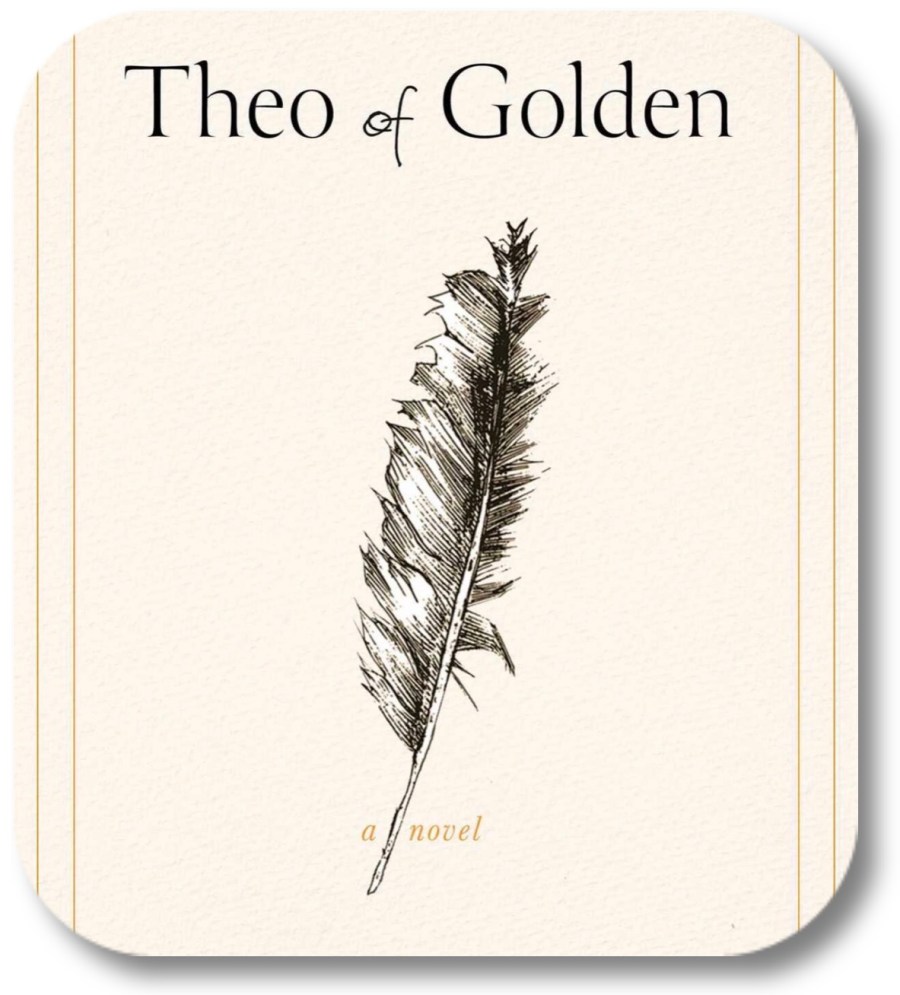
Theo was in Golden for only a year. He had a great fondness for rivers. Perhaps every son of Portugal has the sojourning spirit of Magellan in his blood. Only a year. But long enough to create a current of his own and to catch others in it.
On his first full day in Golden, Theo woke early. Other than a coffee shop and a small diner, the businesses along Broadway were closed. On this day, and for the foreseeable future, Theo had no deadlines, no meetings, and no obligations. He was at liberty to enjoy the carefreeness of unfettered flexibility and complete anonymity. He was a mere tourist. He was pleased with the feel of his new temporary home. First impression: a very pleasant place to be, and appropriately named. Golden.
As if to reflect the customers in the shop at that moment, the collection included a full range of humanity — age, race, and expression. Portraits and portraits and more portraits. That would almost make one believe the people portrayed were spectators of the Chalice rather than mere adornments on the walls. For now, he drank his espresso in small, deliberate sips. “Can you tell me about them?” Shep handed Theo a local magazine, The Gold Standard. On the cover was a picture of the coffee shop, taken at the entrance through a fisheye lens that caught all three walls — left, right, rear — and most of the portraits. Theo opened the magazine. It began as a lark. A “what if?” A “would you?” A “maybe.” Coffee shop as art gallery. The Chalice is owned and operated by Shep and Addie Carlile, both natives of Golden. The Chalice is a few streets away from the home and studio of Asher Glissen, also a native of Golden and one of its most prominent artists, renowned as a master of portraiture. There are presently 92 portraits on display. All are for sale. When one sells, another piece takes its place. Asher can often be seen camera in hand, photographing material for his work. He might well ask you to look his way. If he does, don’t be surprised if you become part of the Chalice gallery. For one like Theo, the portraiture in the Chalice was an embarrassment of riches, a treasure trove, a visual feast. For him, each face revealed a mood that hinted at a story and begged questions. “That fellow’s been through some hard stuff. His little girl got hurt real bad in a car accident a while back. The mother was killed. He doesn’t come here very often, but he usually just wants a regular coffee with room for cream. I don’t think he even knows his picture is up here.” Theo nodded and turned to Shep. “Do you know all the people on the walls?” “I know most of them at least a little bit. But Mr. Theo, before we talk about them, please tell me about you.” “I have lived in a number of places. I was born and raised in the north of Portugal, but I have lived for many years in New York City. Shep — one thing I don’t understand. Why do people not buy the portraits?” “I have to believe that one of these days, people are going to realize what a treasure these are.” Theo sat on a bench near the fountain. He thought of the unsold portraits. Of the homes that would be beautified and the lives that would be enriched by their presence. Of the artist who would be encouraged by their sale. It was there that the idea formed in his mind.
Theo purchased the portrait of the young woman with short hair, familiar eyes, and the unsmiling but not unfriendly face. He paid $125 cash. It felt more like a theft than a purchase. The woman’s name, as Shep had told him, was printed in small letters on the back of the frame. Minnette Prentiss.
Dear Mrs. Prentiss, As I studied your portrait, I had a strong sense that it belonged in your possession or in the possession of someone dear to you. After all, it only seems right that the finished work should go to the one who inspired it. And so, I took the liberty of purchasing the piece with one purpose in mind. I would deem it an honor, and it would be a great kindness to me, if you would accept the portrait as a gift, to do with as you please. Might I make a proposal? (And I do so beg your pardon if this is entirely out of line.) Next week, on Thursday, at seven o’clock in the evening, I will be sitting on a bench beside the fountain in the median nearest the Chalice. To make myself obvious, in case there are multiple exquisitely handsome 86-year-old men sitting there at the same time, I will be the one wearing a heather green flat cap. It should only take a moment to give you the portrait, though I will have plenty of time to visit should you be inclined and able to do so. With kindest regards, Theo
“What if he’s a stalker or somebody mad at me for some case I’ve handled? What if he’s the brother of the gang member we sent away for life last month?” Derrick asked. Minnette rolled her eyes. “If it were any of those, I doubt they would have gone to all this trouble just to be a bother.” “I don’t feel very comfortable about this,” he whispered. “I totally understand. And I’m glad you love me enough to worry about it. The risk seems pretty minimal, if you ask me. It’ll be in broad daylight, people everywhere, and if we don’t like what we see at the fountain, we don’t even have to go there, right?”
Minnette snickered. “Counselor, are we actually thinking of doing something risky? The two highly cautious, supremely rational type A’s? “Just think, we might actually meet a sincerely kind human being.” Asher was Derrick’s uncle in law. He gave him a call. Asher had often wondered how Derrick could work criminal cases day in and day out without becoming totally jaded and distrustful of the entire human race. But he was also rather pleased that an old man had dreamt up such a generous scheme, if in fact that’s what it was.
By Thursday evening, Derrick and Minnette were a giddy mixture of adventure and mild apprehension. Derrick’s one lingering concern, negligible at best, was about how they might be perceived in the eyes of their peers if they foolishly walked into a scam of some kind. At fifty yards or so, a heather-green flat cap shone like a beacon. Their stomachs jumped. “Derrick, there he is,” Minnette whispered. Theo almost hoped Mrs. Prentiss might not show up, and he could put this whole silly idea to rest. But show up she did. He rose, removed his hat as a gesture of respect, and stepped toward Minnette. An aura worthy of the description “distinguished.” He was clean-shaven. He was obviously old but a “young old,” in a way that would almost make a younger soul look forward to seniority. As Minnette held out her hand to shake his, the thing that struck her most was the warmth of the old man’s face: as he now took delight at being in her presence. His face bore a radiance of sincere gladness. It took Minnette by surprise. Very pleasant surprise. “Please forgive me if I am a bit nervous. I’ve been afraid that at seven o’clock a policeman would arrive and put me in handcuffs and send me far away. Instead, I have the pleasure of meeting an angel. I am very happy to see you.” “But Mr. Theo, please tell me, why are you doing this?”
The portraits, at least to me, all seemed to belong somewhere else. I intend to buy all of them one by one and send them to their homes.” I thought it would be good to choose the kindest face among them, the gentlest of them all, and give that one first. I didn’t know how my idea might be received, so I asked myself, who looks most likely to humor an old man with a silly idea? Everything about the moment caught her by surprise: the reverence with which the old man spoke of her, the gentleness of his voice, the generosity of his assessment. Your eyes that remind me of a girl I knew many years ago, long before you were born. She cared for every living thing and for people in the most simple ways. She was a beautiful girl, a wonderful soul. And when I saw your eyes and your face, Minnette, I saw her. There is strength in this face.” He paused again. “And bravery.” Another pause. “And kindness…. Yes.” And then, a bit more softly, “And sadness. The good kind. It is all there.” “The portrait is telling you the truth. there is sadness in that face. It has been there for a long time, and it seems to get deeper and deeper.” “The good sadness, I think, is always trying to tell us something very important.” So quickly, the innocent exchange of a portrait, an unexpected gift, had opened the hearts of two total strangers to one another, across generations and backgrounds and homelands? That she would bare her soul to an old man whom she had known for only a matter of minutes? “I became really good at living up to people’s expectations of me. Too good. But you know what I really want, Mr. Theo?… More than anything else in the world, I want to be a mom.” Theo merely nodded, as if to affirm the sanity and beauty of her desire. “I made my dear old dad proud. Miss Pragmatic. Career first. I’ve kept the sad part of my life a well-hidden secret, but I’ve hated myself a little bit every day since then. So, Mr. Theo, that might be the sadness you see.” Minnette sat up and wiped her cheek with the back of her hand. “My dad is the brother of the artist who did this portrait. The artist is my Uncle Asher. “Mrs. Minnette Glissen Prentiss, before I go, I remind you, this face belongs to one who is strong and brave and kind. It belongs to one who is capable of saintliness. You, my dear, are Gammy’s pride and joy, the gold of Golden, the wine of the Chalice, and, for an old man new to your town, a great blessing. I present to you this, the portrait of St. Minnette.”
Who shall I do next? He decided to be led by two considerations: first, sheer intuition — which one felt right. Second, he would look for faces that had suffered loss, those who seemed to be weary or worried or troubled somehow. Part of Asher Glissen’s astonishing genius lay in his ability to capture not merely the physical qualities but also the personalities of his subjects. Mood, temperament, and story were embedded in every face. The pleasant reality about Theo’s selection process was this: It was impossible to make a wrong choice.
Theo stops for a chat at the Verbivore bookstore with its owner Tony. They chat about the history of Golden and a possible rental apartment near the promenade. He also meets a few of the locals.
Everything in the office — the furnishings, the artwork, the man himself — exhaled refinement and propriety. Mr. Ponder continued, choosing his words carefully. “I would make one request that I hope won’t offend you. This has been a most unexpected meeting, and very pleasant, but we are still strangers. I owe it to my clients to know who I might be renting the apartment to. Could you provide me with a list of references, or letters of reference, so I can do a bit of due diligence?” They sat once again in Mr. Ponder’s office. As Theo spoke, the consultant sat in rapt attention. And then there were questions. Lots of questions. Almost two hours later, Theo and Mr. Ponder rose and walked downstairs. They shook hands. Theo was now tenant, client, neighbor, and confider to James Ponder. “Mr. Ponder, I mean, I know the decision is yours, but there’s something about the man I don’t like. I’m not sure I trust him. I don’t know why, but I just don’t. He just seems a little too nice and a little too slick, if you ask me. That’s my first impression of him. And we already have as much work as either of us wants.” Mr. Ponder was polite but firm in his reply. “Anita, I know this is unusual, but I’ve already done some checking and made some phone calls, and I’m comfortable taking him on as a client. I’m not going to be able to tell you an awful lot about him. You know how our profession works. This is one of those times I’ll have to be very guarded. But for now, just do what I tell you.” There was a decidedness in his voice that squelched any reply. Her face went pale, her lips closed, and her nostrils flared. Call our cleaning service, and have them do a deep clean of the apartment. Mr. Theo will be moving in soon.” Her mouth dropped open, but she did not speak. Her face was a mixture of disbelief and mild horror.
Theo moved into the apartment at the Ponder House. As Mr. Ponder’s client, Theo provided him with appropriate bits of personal information, including the names of contacts and significant business associates in case of an emergency. “I’m an old man; you never know.” He also deposited a hundred thousand dollars to be held in trust and used by Mr. Ponder for expenses and costs that might arise. He gave Mr. Ponder a list with three names on it. He had already purchased the portraits and was eager to make the bestowals.
In her first official act of employment for Theo, Mrs. Gidley (at Mr. Ponder’s direction) found the addresses of three local residents and mailed Theo’s handwritten letters to them. She did the work, did it well, and was paid handsomely in return. Why on earth is this old man giving away free portraits? She wondered. Very suspicious. Bestowal number two was Junior Perryman, a mixologist at the Bowleg Bar and Grill. Years earlier, in a previous career, Junior had lost an arm in an accident at a local textile mill. In his portrait, a prominent scar from the same accident was visible over his left eye, and his nose was slightly misaligned. “Mr. Junior, when I saw this face, I had a feeling this was a special man, a wise and good man. Now I know. And a good storyteller as well. I’m very glad I get to be in the world with you.” Junior took the portrait in his hand. “Thank you. So, you’re just going to give this to me?” He spoke as one who expected to be asked for something in return. Theo bowed his head and put a hand over his heart. “It is my honor.”
Bun Everson, the third beneficiary of Theo’s inspired idea, arrived with a friend, Sara. Bun (short for “Abundance,” her grandmother’s name) was enrolled in the graphic design program. Sara was majoring in English with an emphasis in creative writing. (It was she who had written the article about Asher in the Gold Standard.) “We want to start a magazine together when we graduate,” Bun said. Much later, the magazine launched. One of the first articles was about a day when two college students met an old man named Theo. Bestowal four went to Frankie Knowles. The splayed eyes and crooked mouth did not diminish the brightness of the twelve-year-old’s smile. The boy arrived with his father and mother. Theo holding both of Frankie’s hands in his — the wheelchair was parked a couple of feet in front of the bench, so that the old man and the little boy were knee to knee, facing one another. They carried on like old friends for half an hour while Mr. and Mrs. Knowles sat quietly. They were spellbound. A short silence, during which all eyes were fixed on the gift, was followed by generous thanks, hugs, laughter. The idea was off and running. A restless accountant. A gregarious bartender. An aspiring entrepreneur. A NASCAR fan. At least eighty-eight to go. Theo had struck a motherlode of opportunity. He had stumbled onto his purpose as the newest resident of Golden.
Intuition and appearance (“faces that have suffered loss”) eventually led Theo to the portrait of Kendrick Whitaker. The young man worked as a custodian at the university. It was a job for which he was grateful, in which he took pride, and to which he brought an admirable combination of punctuality, diligence, and excellence. I will wait until eight o’clock. And then there he was, rounding the corner of Light Street and Broadway. An hour earlier, Kendrick had stood at a window in the university admin building, looking down at the old man. The absurdity of Theo’s letter, the probability that this was all a hustle or scam had driven Kendrick to the sensible decision not to accept the invitation. But he had walked to the window a second time and then a third, vacillating between fear and fascination, from skepticism to curiosity. A frailty or a sadness or something else about Theo softened Kendrick’s apprehension. He left the building and crossed Broadway as the nearby church bells chimed eight times. “I’m glad you’re here.” “I can’t pay you for this.” “Nor would I take it if you could, Mr. Kendrick. This is a gift. It has been in the Chalice for weeks now, but it belongs with you, or with someone you love. Please, I think you’ll like it very much.” He reached out reluctantly and then, as if having touched a live wire, took a step backward. The wrapped item that Theo had offered him was suddenly sinister, as welcome as a venomous snake. Kendrick’s face became tense and cautious, his body defensive. Theo hastened to put the young man’s mind at ease. He peeled back the plain brown paper as quickly as he could, then held up the portrait in both hands. But now, up close, he could see that someone had taken great effort and given painstaking attention to every detail, every line, every shadow in his face. Someone had deemed him worthy of their time. Worthy enough to be matted, under glass, and framed. “Mr. Kendrick, do you know the saying, ‘It is more blessed to give than to receive’?” Theo leaned in. “I tell you, it’s true.” Kendrick’s eyes were fixed on the portrait. Finally, he spoke “I’m gonna give it to my baby. I’m on my way to see her right now.” He smiled, eyes and mouth, at the prospect of giving such a gift to his daughter. “Today’s her birthday. Eight years old today. I’m going to the hospital to see her right now. The bus’ll be here in just a few minutes. She got hurt real bad in a wreck. Her mama died, and she been in and out of the hospital since it happened. Her leg isn’t healing right, so they had to do another surgery.” “What is her name, your daughter?” “Lamisha. But I call her Scooby. She likes to draw.” Kendrick looked closely at his portrait. “Uh, uh, uh. She is gonna love this. He did this with pencils or what?” “Pencils. It’s amazing, isn’t it? It looks just like you.” “Shoot, it looks more like me than I do.” Kendrick smiled. “Mr. Kendrick, I tell you what I saw when I first looked at your picture. I thought, ‘This is a strong man.’ I could see worry and some hurt in the eyes, but still, I said to myself, there is kindness in this face. And now I know it is the face of a good father.” “Well, thank you for the picture. That’s really nice. Two things dominated Kendrick’s thoughts: Scooby will be happy, and hardly anyone ever calls me “Mister.” Late that afternoon, A young man, a uniformed courier of some sort, stood beside a cart. It held a birthday cake, a small arrangement of fresh flowers, and a large wrapped box. “These are for Miss Lamisha Whitaker,” the young man said. The young man handed two envelopes, one pink and one white, through the sliver of the open door. “Do I have to pay for this?” “No, sir. Somebody sent it to you.” Kendrick looked at the envelopes. His name, with “Mr.” before it, was on the white one. On the pink one, in beautiful flowing script, were the words, “Happy 8th birthday, Scooby.” The box of art supplies — pens and pencils, paints and brushes, pastels and pads — had awakened a gladness in Lamisha’s face that her dad had not seen since the accident.
When evenings were unobligated, he would make the short walk from Ponder House to the riverside in time to be seated precisely fifteen minutes before sunset. He had carried this practice, this observation of sunset, to every place he’d lived for the past five decades. Around the world, a host of rivers had welcomed his solitary presence, always facing west. Though the memory was decades old, Theo never entirely escaped the dizziness, the difficulty breathing, or the disorientation that he had felt when he first got the news his daughter had been killed. The ten-year-old had been the unexpected jewel of a loveless marriage. Tita. Named for her grandmother. The young Theo, often away from home on business would return home to Tita at the end of workdays or trips abroad, those first moments of exuberant embrace between adorer and adored, became the moments around which he built his existence. Even Theo’s affection for his wife grew. The life she lived — license, privilege, respectability, boredom — was financed and well-fed by Theo’s achievements – her taste for society and her need to be noticed. They also landed her in a world where strong drink was plentiful. Theo at first relished, then endured, and eventually loathed the perks of his business success and wealth. Social gatherings, tuxedoed events, balls, galas, concerts, and galleries became the bane of his existence, the more so as each event encroached on his time with Tita.
Theo was in New York City at a ceremony in the United Nations building when he got the call. An international connection from France, that his daughter had been killed in an automobile accident, a single-car accident caused when Theo’s seriously inebriated wife, also killed, lost control of her expensive car, left the roadway, flipped repeatedly. Sleeplessness, tremors, and starvation became his reality. His suffering was aggravated by a sense of guilt that took the form of a single tormenting question: “Did I not protect my child?” Only grief existed. And it was everywhere. He had other houses to which he might flee and the means to stay away for as long as he wished, but he chose to remain at his home near Paris. And so, he walked. And walked. Every day. As if his life depended on it, he walked. Alone. Bedraggled, unkempt, inconsolable, he walked. Furious, frightened, fitful, he walked. Then for a moment he could separate beauty from his grief, and celebrate, if only ambivalently, that there was still a world of goodness apart from, or bigger than, his aching loneliness. The sheer wonderment of the moment, the wings of fifty thousand birds, and the intoxicating surplus of beauty, overwhelmed him, as though a rope that had been pulled taut, that tied him to the darkness of Tita’s death, had snapped and fallen powerless to the ground. Somehow under the spell of that April evening in France, his splintered soul had begun to heal. And on many days, sometimes for many consecutive days at a stretch, he would check the local morning paper for the exact time of sunset to ensure that he would be punctual for his date with a ten-year-old girl whose laughter was a murmuration and whose memory was a single star, the brightest in all the sky.
“Anita, here are two more names for Theo. And here are his letters to go with them. Do these things first, please.” She was not yet willing to acknowledge her enjoyment of Theo’s project and her growing sense that she was part of something admirable. Mr. Ponder paused. “Anita, many years ago, Theo was a client of my father. I checked our files,” he continued. “Theo suggested I do so as proof of his character, and I found Dad’s notes. It verified what Theo had told me about himself, and that’s why I took him on as a client. I want you to know he is not a man to fear or be suspicious about. That’s all I can tell you, but I hope it’ll put your mind at ease.”
Mr. Ponder outlined Lamisha’s story: “Dr. Ikande, I’m calling to ask if you might be willing to take the young lady as a patient. Her family doesn’t have private insurance, and she’s been treated by various doctors at this point. We would like one doctor to handle her case for the remainder of her treatment and the medical director says you’re the best. I’m representing a private individual, a benefactor, who wishes to remain anonymous. He’s a friend of the Whitaker family and wants to help them, but he doesn’t want them to feel indebted to him in any way. If you take the case, you will bill him through my office. He is very capable of covering any costs involved and very happy to do so. Mr. Ponder met with Theo to inform him of the arrangement. “Theo, Lamisha is in good hands. The doctor is a remarkable man who specializes in treatment of leg injuries.” Theo nodded. He was pleased that Lamisha’s future care would be consistent and high quality. “He understands the need for discretion. From what I can tell, he is a generous man himself. And for the grandmother we’ll deposit some funds with her employer, and they’ll use that to pay her for as long as she’s on leave. The folks who own the company are old friends of mine. I told them I was working on behalf of a client who wishes to remain anonymous, so they’ll keep it all secret. Actually Theo, I find this all rather curious, but it’s certainly admirable. People like you renew my hope in humanity.”
It was inevitable, given their proximity to one another, that Asher Glissen and Theo would eventually cross paths. Asher, true to his habit, closely examined the features of Theo’s face. It would be a good face to draw, he thought. He has strong eyes.
“I have a home in New York City now. I’ve been there for almost twenty years.” “And what brings you to Golden?” “I have some properties nearby that need my attention.” “I know we’ve got some fine, generous people in our town. Got plenty of problems and bad elements too, but there seems to be a prevailing goodness here most of the time.” Mom was an artist too. She studied art in college, actually took some classes in Madrid, at the Prado.” Asher was not used to talking so freely about matters so personal. He would remark later that the old man listened in a way that made one dangerously willing to talk. A business partner had once described it as Theo’s superpower. “I ended up falling in love with a girl I’d known since grade school: Brooke. We got married, and we have one child, a daughter named Samantha. We call her ‘Sam.’ She’s a schoolteacher in South Carolina.” “My dad died not too long ago. He was sort of a soft-spoken, melancholy soul himself, but he was a good man and a good dad. He lived with me and Brooke at the end of his life. My mom died a few years ago of Alzheimer’s. I was fortunate I was always able to spend a lot of time with her, especially toward the end of her life. Her mind was really gone, and she said some bizarre things, but she never got mean like some people do when they get the disease. But I guess if a work of art makes us see something familiar in a new way or makes us feel something we ought to have felt all along or shows us our place in the world more clearly, maybe then it qualifies as ‘good.’ If it makes us better somehow, maybe that’s what gives it value.” “For anything to be good, truly good, there must be love in it. I’m not even sure I know fully what that means, but the older I get, the more I believe it. There must be love for the gift itself, love for the subject being depicted or the story being told, and love for the audience. Whether the art is sculpture, farming, teaching, lawmaking, medicine, music, or raising a child, if love is not in it — at the very heart of it — it might be skillful, marketable, or popular but I doubt it is truly good. Nothing is what it’s supposed to be if love is not at the core,” Theo snickered at himself.
“Now Theo, why are you buying the portraits at the Chalice? Do you know the people?” “Before I deliver the portraits, I look, look, look at them. Sometimes when I eat my meals at home alone, I bring a picture to the table and set it across from me. And while I eat, I study that face. By the time I meet them at the fountain, I feel as if I know them, at least a bit. That’s why I find your work so interesting. It’s as if you make it possible to look not merely at the face but through the face, to the heart of the person. To the possibility of the person.” “Well, Theo, that’s awfully nice of you, but I have a hunch it’s your words that are bringing the portraits to life. Some of them have been on the wall, speechless, for months, and nobody seemed terribly moved by them. From what I can tell, you take them down, cast a spell on them, and, all of a sudden, they have something to say.” “You ask me why I do it? Well, as I have said, I feel as if the idea came from elsewhere, as if it was given to me. But regardless, I’m certain, now more than ever, that giving the portraits is a good and loving thing to do. I confess that at first I did it hoping to make someone else happy. Now I fear that my reasons are almost entirely selfish. I do it because it brings such happiness to me.” Asher said, “Your kindness is not just a gift to them, you know. It means a lot to me.” “Unmet expectations have a clever way of showing up at every stage of life. I appreciate your candor. Maybe you could look at it this way, Asher. If your expectations had worked out as you’d hoped, I would have been denied a great gift. I would never have had the pleasure of buying the portraits, of having meals with the subjects, of finding the people and meeting them at the Fedder. I would never have had the chance to tell them something good and true about themselves. Perhaps, when you were drawing the portraits, you were drawing them for me, even though you didn’t know me yet.”
Mr. Ponder’s single statement, “Mr. Theo is a fine gentleman,” was more than enough to assure most Goldenites that Theo was a man above reproach. No last name. Aside from that quirk, they were certain he was just like them, an average law-abiding citizen, only older and better. Or so they thought.
Theo’s calendar began to fill up with appointments. Tuesday, Bob, seven o’clock. Thursday, Hendley, seven o’clock. Monday, Ahmad, seven o’clock. He spent a portion of most days at his dining room table, handwriting invitation letters for Mrs. Gidley to deliver. One bestowal presented a unique challenge: Ellen. “She’s homeless, but I think she stays at the Mission sometimes or under the bridge,” said Shep. No one knew of a last name for her. There was a bashfulness about her attempted smile but clearly, hers was a face that had suffered loss. It bore the road wear and troubling scars of hard-fought survival. Her bottom lip protruded, bulldoggish, beyond her upper lip and hinted that she might be missing teeth. As he approached the Fedder half hour before the designated time, he saw her. She was already sitting on the bench. while he was still several steps away, Ellen held up an envelope. “No man has ever sent me a handwritten letter before.” He noted to himself that the woman had an educated mind, even if it was untethered. And he chided himself for making assumptions about her in advance. “I’ve had my bike, the Noble Invention, for ten years. Every day for ten years, we’ve been together. That’s longer than a lot of marriages. Everything I own is on my bike. Travel light. Like Mother Teresa.” With that, the weave and bob of their conversation continued. Theo would have to learn about her in bits and pieces. “Ellen, when I first saw your portrait, I asked myself, what is this person like? And I thought, she is a most interesting person. In her eyes…” She immediately focused on that part of the drawing. “In her eyes I saw someone who is wise and tested. I think she is very strong but very motherly too. Yes, very motherly. I think that some people misunderstand her, but she is a good woman, a kind woman, a woman with a tender heart.” “Mr. Theo, do you think I’m nice? Am I making a good first impression? Mrs. Ocie Van Blarcum has been helping me with that. She helped me pick out this dress.” Ellen patted the blonde fabric. “I do indeed. You are very nice to sit with an old man like me.”
“Ellen, could you tell me about… the happiest day of your life?” “Thirty years ago in April, I gave birth in a hospital. I found out that the hospital people had gone through my book bag and found some papers from the mental in Columbia. When I woke up, the nurse and the policeman were in the room. The nurse said, ‘Be real quiet so that you don’t wake up the baby,’ and she took my tiny little girl and laid her on my chest. That was the happiest day of my life. My little child lay there and slept. Her head and her hand were right on my heart, and I thought it would break; I was so happy. And I called her by her name. ‘Hello, Willa.’ I ended up back at the mental. They took her from me. I don‘t know who or how. Kidnapping by bureaucracy. And once they declare somebody like me crazy or unfit, they close the book forever. Mr. Theo, you can‘t imagine what it’s like to know there’s a child in this world who you love more than life, a child you’ll never see or touch again.” “Ellen, the older I get, the more convinced I am that every hurt the world has ever known is somehow the fault of every person who ever lived. Maybe not directly and never entirely, but somehow, I fear, we own all of the world’s hurts together.” “Mr. Theo, that was the worst thing I ever had to live through. But it was the happiest day of my life.”
Theo joined the group of pedestrians, walked past Basil, and dropped the envelope into the open guitar case. This time Theo would spare Mrs. Gidley the trouble of delivery. Basil’s portrait: a young man in his thirties, tousled shoulder-length hair, thin scraggly beard, attempted mustache. Next bestowal: Basil Cannonfield.
Basil Cannonfield was the embodiment of calmness when he strode to the Fedder, as if it were entirely reasonable and predictable that a gift-giving, one-named stranger would summon him by handwritten letter to a fountainside rendezvous in early May. “Actually, Mr. Theo, in my line of work it’s rare for anybody to stop and listen, so, when somebody does, I can’t help but notice. Thank you, too, for what you put in the envelope. A twenty is a big deal in this kind of work. My sister — Genevieve — was diagnosed with cancer, and her husband left her. ‘In sickness and in health’ obviously didn’t include caring for a wife with cancer.” Basil shook his head in obvious disgust. “I quit my job to help take care of her. It was tough, but I was lucky I had some money saved up and could be there for her. I wrote a bunch of soft songs to help her rest. They weren’t the kind of thing I could ever perform on a sidewalk. I loved it when I could sing her to sleep. An audience of one. The best ever. After about a year, she died. They were some dark days. I took over my sister’s lease and still live there. My girlfriend is with me now, but for a long time, I was there alone. I’ve been doing street music for three years.” “I want to tell you what I saw when I looked at your portrait. I saw a boy in the smile. It’s a face that hasn’t forgotten playfulness. I think children would be drawn to this face. But I also see a man. There is wisdom here, I believe. In the eyes. A young, tender heart; a wise, old soul. That’s a good combination. Wisdom and playfulness. There is the possibility of a saint in this face. This could well be a portrait of St. Basil.”
“Theo, you might not believe this, but before Vietnam I was a nice, quiet young man who read books and obeyed the rules. Didn’t smoke, didn’t drink, didn’t cuss. I was a bit of a nerd. I was planning to go to college, maybe on a golf scholarship, but all that changed when they drafted me. I couldn’t qualify for a deferment, and my parents didn’t have any pull, so I got shipped off to Basic. They shaved my head, gave me a new wardrobe, taught me a bit about being a soldier, and then sent me to Vietnam. I was what they called a ‘quickie.’ The Army needed lots of young fighters over there, so they sent us whether we were ready or not. I’d never shot a gun before, and here I was going into combat, in the jungle, no less. I wasn’t excited about it, but it felt kind of manly — for about two days. But god aw’mighty, was I in for a surprise. The guy who gave me this brandy lives up in Illinois. The jungle totally ruined him. He’s been drunk, stoned, homeless, or in jail ever since he got back. That’s over fifty years. We hadn’t seen each other for years, until the Wall dedication. And then, out of nowhere, we both started sobbing, for being part of a world that can do such godawful things. Off and on while I was over there, I was a devil. Vietnam was a world full of monsters, and I was one of ‘em.”
Dr. Ikande thought it best to keep her hospital stays as short as possible. It was his informed medical opinion that “there is healing power in being at home.” Theo would visit briefly with Kendrick and Grandmother Whitaker and then give his undivided attention to the little girl. She was clearly the main event in his mind. He is helping a child improve her reading skills, but he is also teaching a course, as Basil might say, “in magic.” The magic of story. The wonder of words. The fertility of imagination. The little girl savors the warmth and expressiveness of the old man’s voice. It is not merely a sound. It is a place. A color. A haven. And for the old man, the moments are equally enchanted. They bring to mind vivid memories of sitting on a sofa in France, decades earlier, with his own dear child, Tita. They enjoyed some of the same books he now shares with Lamisha. Before long, Lamisha’s dad, began reading and re-reading stories with her. The story was called “The Princess of Titalamish.” Theo insisted that Lamisha learn to pronounce the name correctly. “Like this, one syllable at a time. Tee-tah-lah-meesh. The story was about a little girl who was given a pair of strikingly colorful, magic shoes, a gift from her Papá. The shoes made the little girl different, undeniably so, than all her classmates. “For you, my dear. This is the only copy in all the world.” That gift would forever be one of Lamisha’s most prized possessions. She kept it beneath another of her most prized possessions — her dad’s portrait.
When Theo left his boyhood home, he made up for lost time. Wherever he lived as an adult, he became a patron of the symphony, with a more than casual interest in the music he admired. No surprise then, that, while Theo was in Golden, a friendship between him and Simone sprang up from their common fondness for the cello. “So, Mr. Theo, I play an 1859 Kriner, from Munich. To me, it is a masterpiece. When I first heard Professor Gobelli play it, I almost cried. I heard music and tones that I never knew were there.” Simone told Theo of upcoming events: a quartet performance, a wedding, a concert of the university chamber orchestra. That recital would be Simone’s last step before completion of his master’s degree.
From the outset, Shep had promised confidentiality, as did Asher and Tony once they learned of Theo’s intent. And yet, despite those measures to keep his kindness below the radar, it could not be entirely unnoticed. Word of “this old man who gives away portraits” eventually reached the desk of a local newspaper reporter. When she contacted Theo about doing a story and a blog post, he shuddered at the prospect, imagining some cringeworthy article about ‘a clandestine portrait fairy flitting through the fountains of the Promenade,’ or worse. Instead of declining her request, however, he scheduled a meeting two weeks out at the Fedder. He requested that she come alone. And, emphatically, no photographer. She agreed. She was more than a little disappointed when he asked, almost pleaded, that she not write about it in the newspaper. He explained, “I never did this to be noticed, and I fear that, if you write about it, I will not be able to continue my work. The anonymity and unexpectedness of the gifts are almost as important as the portraits themselves. Does that make sense?” Mr. Wordsworth, once wrote that the best portion of a good person’s life is ‘the little, nameless, unremembered acts of kindness and love.’ If those people read an article that focuses on me the least bit then, whether you mean for it to be or not, the gift would be diminished somehow. There is another teaching about kindness,” Theo said. “ ‘Do not let your left hand know what your right hand is doing.’ “For me, for now, today, ‘little, nameless, unremembered’ sounds right. I wish we could teach that to our children. Do you have children, Katherine? There is a young musician who plays on the sidewalk near the Chalice. I’ll bet he would be an interesting story. And he might appreciate the attention. Katherine, have you got a few minutes more?” He handed her the wrapped package and gestured for her to open it. Katherine had never once thought of herself as pretty. Not once in her entire life. Her childhood had been a minefield of taunts about her size and plainness. She grew up avoiding mirrors and cameras. When Katherine peeled back the wrapping paper and realized what she was holding, she attempted to speak, visibly caught her breath, and blushed. Her eyes filled, and she tried to smile through awkwardly quivering lips. The realization that someone had paid such attention to her face — her face — that someone had drawn her with such tenderness, had deemed her worthy of such meticulous effort and artistry, reduced her to meaningful silence. She and Theo gazed at the portrait as she gathered enough composure to speak. She hesitated, “He did a beautiful job.” “Well, the artist simply drew what he saw, and what he saw — who he saw — is a work of art. I am amazed at the effect these portraits have on people. Your reaction is typical of what happens each time I do this. No credit to me, mind you. It is a gift of God. And this Asher Glissen has a remarkable ability — one little appreciated, I’m afraid — for helping people see themselves for who they really are.” “Mr. Theo, when I was a little girl in grade school, here in Golden, my father lost his job. We were never very well off to begin with, but for a couple of years, we were really poor. He’d had a really hard life, and I realize now he was probably a very sick man. As a little girl, I didn’t understand or know anything about that. I was already a fat little girl. I was easy prey for kids looking for somebody to pick on. I think my dad knew me and my siblings were suffering in our own ways, but he was powerless to help, and he was suffocating in his own disgrace. So, one day, he just up and left us. It cuts pretty deep for your dad to walk out on you. I’ve spent my whole life being a little girl in those too-small clothes in that rundown trailer park. That’s the picture of myself that’s stuck in my head, and it doesn’t look at all like this one.” She gestured toward the portrait. Theo spoke. “Then I propose that we make a trade. Give me that old picture in your head, and take this new one home with you.”
“Asher, in every face I detect sadness. It is subtle, and maybe it takes an old man — an expert in sadness — to see it, but it is there in every portrait, in some more than others. It is not gloomy or angry or even terribly obvious. It is like a weariness or an unmet longing or a disappointment; something we inherit from those who lived before us. But to these old eyes, it is in every face, the universal affliction. It is what gives such gravitas to your portraits and makes them so believable. Even when your subjects are smiling, the shadow of sadness is there. And so far, my meetings at the Fedder only confirm my suspicion.” Theo shrugged. “When we’re young, we’re usually too busy or too self-absorbed to see it, but by the time one is almost ninety, this world has beat the sadness into him quite deeply. My expertise in sadness is hard-earned. But I realize more and more that it is a gift. Living with sadness, accepting it, is easier than trying to pretend it isn’t there. It is another of life’s great mysteries that sadness and joy can coexist so compatibly with one another. In fact, I wonder if, on this side of heaven, either one can be complete without the other. There is the beautiful possibility that great love can grow out of sadness if it is well-tended. Asher, we are masters at masking our sadness, but deep down inside, if we are honest, we know that there is an unsatisfied longing deep inside all of us. Your portraits invite people to be alone and quiet and truthful with themselves; to admit the longing and to discover the goodness in their sadness. Maybe? Sadness is only one part. There is beauty and gladness and playfulness too. It’s all there. In elegant proportion.”
The relationship of Theo and Mr. Ponder evolved unmistakably into a friendship. Mr. Ponder was happy for any chance they might have to spend time together, and his small workload easily accommodated Theo’s spontaneous visits. He was still the serious, dignified man of business he had always been, but there were flashes of cheerfulness and energy that could only be attributed to the old man’s influence. Mrs. Gidley, too, was being changed by the old man’s presence. She was enjoying the sense of mild adventure that Theo had brought to their work. There was a noticeable new enthusiasm about her work. She even became giggly at times about belonging to his cabal of generosity. Theo’s creative generosity was a welcome disruption to business as usual.
The gift was meant for a young woman named Clarise. Her portrait showed a beautifully proportioned face with sensuous lips and serious, half-sleepy, intelligent eyes. Her expression seemed cautious and hesitant, perhaps even afraid. She appeared to be in her late twenties or early thirties. Hers was a face worthy of a magazine cover. It was also a face that, had suffered loss. Theo saw sadness in her features. At seven-oh-five, one Cleave Torber, descended on Theo like a dark cloud and disfigured with anger. “I don’t know who you think you are, old man, and I don’t appreciate that prissy ass artist doing a portrait of her and hanging it in that coffee shop without my permission. If you weren’t so old, I’d kick your ass across the river.” “Sir, I’m very sorry. I did not mean to upset you. Would you please give this to Ms. Clarise for me?” Torber snatched the picture. “Here’s what I’ll do for Ms. Clarise.” He took the portrait and slammed it to the ground at his feet. Glass broke inside the brown paper. Torber stomped the portrait twice and then ground it beneath the heel of his boot, his eyes fixed on Theo. “You are a pig of a human, a disgrace. Idiota! Babaca! Filho da puta!” Theo turned and looked intently at Derrick. “Forgive me, sir, but… do I know you?” “Well, sort of. My name is Derrick Prentiss. A few weeks ago, you gave a portrait to my wife, Minnette. You made quite an impression on my wife. She still talks about you.” The frame was broken in multiple places, and the drawing itself was torn, creased, and punctured. On the cheek of the beautiful, unsmiling, cautious face, a boot print was visible, like a fresh bruise. He opened a drawer and laid the portrait down with the solemnity of a burial. I have now met a Southerner whom I do not like.
Ellen and the Noble Invention were waiting for him at the bench in front of the shop. “Good morning, Ellen,” Theo said. “I could hardly sleep last night thinking about our ride. I’m excited about the adventure. You picked a perfect morning for a ride.” Theo’s old soul and Ellen’s weary soul were wide awake to the promise of the August morning. They surveyed the long span of river. “Mr. Theo, we are now going to begin our tour. I wanted to do something nice for you since you gave me a portrait, but I can’t afford to buy you a present, so I have planned a special bird excursion.”
“I came down here to think. I don’t come down here much, but I felt like being alone tonight.” Theo sensed a heaviness in Kendrick’s voice. “So, Mr. Theo, when they brought that little man into the courtroom, he wasn’t hardly big as a kid. He’s a man, older than me, but still just real small. He’s been in jail all this time, and I could tell he was scared to death. Had him in handcuffs, and he can’t talk in English ‘cause he’s from Guatemala, so they had to have a woman there who could speak for him and tell him everything we were saying. You could tell he was terrified. He started crying, I mean crying hard, and he put his hands together and held them up like he was saying a prayer to us. But he said he had to come back. Mr. Theo, he’s got a little girl, eight years old, just like Lamisha. He said they’s no good cancer doctors in Guatemala. He said, ‘I love my little girl, and I had to come back.’ They took him to jail. Mr. Theo, he still hasn’t seen his little girl. Over a year, and still hasn’t seen her yet. But they’re talking about locking him up for a felony, for ten years or something ‘cause Lamisha’s mama died in the crash. He didn’t have no license, no insurance, and no legal papers. I’m supposed to go talk with the DA tomorrow, and tell him what I think. All I could see was one little man who loves his baby girl lookin’ at another little man who loves his baby girl.” “Just tell him what you think is right, Kendrick. Be as kind as you can.”
The following morning when he left work, Kendrick walked to the district attorney’s office two blocks away and waited for Derrick Prentiss, state’s counsel, to arrive. Grandmother Whitaker, who knew quite a lot about aggrievement, had been very succinct when he asked her what he should do. “Baby, they’s justice and they’s mercy. If you not sure what to do and you gotta choose one or the other, I say always go the mercy way. If you make a mistake, make it for mercy. Bad mercy don’t hurt nearly like bad justice.” “Mr. Derrick, I think he’s been through enough already. My little girl says the same thing. If you was that little man, would you do what he did? Try to get back to your daughter so you could help her? I would. I’d crawl over glass. I think you would too. So, I’m just trying to do unto others as I wish to be done by. I don’t mean to be rude or anything, but you don’t remember me, do ya?” “No, sir, Mr. Whitaker, I don’t. Where would I know you from?” “From the courthouse, about eighteen months ago. I think maybe you don’t remember me ‘cause you never looked at me. You didn’t look at me a single time. You put me in jail eighteen months ago for something I didden do. My little girl was seven. I was in jail almost a year. When she nearly died, I was in jail.” The lawyer the court appointed, I told him I hadn’t done nothing wrong, and I could prove it. But he said if I was smart, I’d plead guilty to something and do a little time. So, that’s what I did. I pleaded guilty, even though I didn’t do one thing wrong. It might do you good to look at some faces sometimes. There are some real people in those faces. Eighteen months ago, I hated you. But I never one time looked at your face. But I’m looking now. Mr. Derrick, I believe you’re a good man. I think there’s a lot of goodness down in you.”
October arrived, and with it, a welcome drop in temperatures. Tolerance levels among Goldenites for cool air and dampness seemed extremely low. And so, Theo decided it was time to curtail the bestowals until warmer weather returned. He had given portraits to forty-three people. It was a satisfying thought. There was no self-congratulation in his reminiscence; instead, only gratitude that he was allowed to be an instrument in the process. He imagined forty-three homes that now displayed the artwork of Asher Glissen. All forty-three recipients had been told they were capable of saintliness. All had been given a description of what Theo “saw” when he studied their faces in the frame.
When Theo asked Chef Bouchard to prepare a special meal for Tony’s birthday and send it to Ponder House, an agreement was quickly struck. “Chef, I’m very pleased to come to the restaurant, but sometimes in crowded places, I find it difficult to hear well. For this one occasion, it would be very nice to dine at home.” “It is my pleasure, Mr. Theo. And my honor.” On Armistice Day, late afternoon, Chef Bouchard himself arrived at Theo’s apartment with dishes and pans full of delicacies. The aroma alone was worth the price of the meal. Mia brought serving dishes. It was an artful blend of dishes, American and Portuguese. Her accent was one more exotic touch to a meal full of exoticism. The meal received the highest tributes payable to good food… unhurried enjoyment and utter disappearance. “Tony, listen carefully to me. I worked that vineyard in 1947, that very vineyard in Douro Valley. I was fifteen years old but strong enough to be of some help. It might well be that these hands,” Theo held out his open palms, “these very hands cut the grapes whose juice is in this very bottle. It is possible that these feet, when they were much younger, of course, danced on those grapes in the winepress.”
It was typed on plain white paper. In Spanish.
Dear Mr. Theo, This is Mia from the Canto. I served the meal at your apartment recently. The birthday meal for your friend, Mr. Tony. Several months ago, you wrote me a letter. You wanted to give me a portrait from the coffee shop. I have always been known by my middle name, Clarise. Shortly after that day, I left him. I was afraid of him finding me and hurting me again. I changed all my numbers, and I now use my first name, Mia. I am still afraid of him but less so now that he has a new girlfriend. I do apologize that your kindness was met with such unkindness. I am glad you did not get hurt. I have a request to make. Will you please destroy the portrait? That Clarise is no longer in Golden. Thank you. Sincerely, Mia
Duty called, and there were matters that could only be handled in New York, none terribly urgent but all in need of Theo’s close attention. He left Golden in early December, intent on spending the Christmas holidays and New Year’s Eve in the city. Over the course of two days, Mrs. Gidley delivered gifts to Theo’s considerable circle of friends, a dozen or more. In the process, their surprise and happiness became hers. She wondered if she was feeling, in some measure, the pleasure that Theo had tried to describe to her about the portrait bestowals. Simone was surprised, however, by the excellence of the item, a genuine Emil Werner made of Pernambuco wood from Brazil. Eight-year-old Lamisha unwrapped her package carefully, slowly, giddily. It was a large box in which were three smaller boxes. One was filled with paints, brushes, pencils, drawing pads, and a jeweler’s loupe. One was filled with all four volumes of The Wingfeather Saga by Andrew Peterson. The third was a pair of shoes, as blue as morpho. For Ellen, Theo had filled his gift of featherwood with bird feathers collected one at a time on his walks through town. Being on the lookout each day for stray bits of plumage had proven entirely delightful to him and a healthy exercise in attentiveness. Four items seemed most suitable: a foldable handsaw, a compact cordless sander and drill, and a wood burner. For good measure, Theo also purchased a scarf of Portuguese cashmere to include with the more utilitarian gifts. On a separate page of his letter, Theo had sketched a basic logo, a small feather, and the words “Oxbow Featherwood.” It was visible proof of his belief that Ellen, the artist, was capable, with some help, of becoming Ellen, the entrepreneur. She would not disappoint Mr. Theo’s confidence. For the weeks following Christmas, the apartment atop Ponder House remained dark. But it was not unnoticed. Many were the ones who walked by, glanced up, and looked forward to the day the old man would return.
December 25. Dear Asher, By now, late afternoon, I’m certain Mrs. Gidley has received her portrait. Can you imagine the expression on her face when she answered the doorbell, looked down, and saw dear Lamisha standing there, package in hand? I have to believe that the exquisite gift was made doubly so by the manner in which it was delivered. I hope so. Thank you for doing the portrait on such short notice and at such a busy time. And again, my gratitude for making the bestowals possible these past months. Every portrait has been, in a very real sense, an Advent, a Christmas, a giving of life. Till then, every good thing, and Merry Christmas, Theo
Those who had previously only known Simone as a pleasant and reserved pedestrian walking to and from class each day were mesmerized by the creature he became under the enchantment of the music. And some in those same rows understood for the first time that the bulky object (“the hockey player”) he carried on his back was possessed of power no less potent than thunder and lightning. No wonder Simone was so protective of it. This cello was his flesh and bone, heart and soul, language and voice. It did not merely belong to him. It was part of him. Arms, hands, shoulders, neck, head, eyes, legs and feet: every part of him felt the song and brought it to life for the audience. From Kendrick all the way to the Penny Loafers, from the quixotic mind of Ellen to the orderly intellect of Mr. Ponder, from the breadth of Theo’s elder perspective to the youthful innocence of Lamisha, all of rows E and F were under a spell. The man on the stage was a Simone they had never seen before. They were fascinated.
“I would like to end the night with a song called ‘Fado for Theo,’ written for my dear friend from the Douro River Valley of northern Portugal.” Simone turned his full attention to a beaming face with quivering lips. Theo was visibly touched, teary, and surprised. He knew now perhaps how recipients of his bestowals felt. “Of course, to be fado, I need guitar and vocals. And so, I’d like to introduce and welcome my co-writers and collaborators, Basil Cannonfield and Kendrick Whitaker. We hope you enjoy ‘Fado for Theo.’ ” “Fado for Theo” was the most accessible of the renditions played that night as well as the musical highlight of the show. “I would make mention of it if it were true, but thankfully that is not the case. Mr. and Mrs. Lavoie, would you like to join us here, please?” As the room buzzed with surprise, Simone saw movement in the shadows of the balcony. It dawned on him that his parents had been there for the entire evening. They walked forward. Welcoming applause and warm embraces met them at the stage before Theo spoke again. He addressed the small audience as if he were addressing royalty. And in his mind, he was. Theo gestured to the row of his friends from the Promenade, “We would like to bestow a small measure of honor, and a portrait, on our dear friend Simone. And now, ladies and gentlemen, I give you Maestro Simone.” Asher very gently — this was his recital, too, in a sense — unveiled the portrait. Afterward as Theo walked to Ponder House alone, he thought to himself, I have tasted heaven. Before he fell asleep that night, he relived the day in his mind. This might well have been the happiest day of my life. Thank you, Sir. Thank you.
In the middle of the night three boisterous young men, moving southward down the median, approached the fountain. They saw Ellen on the bench — the odd little woman apparently oblivious to their presence. “I dare you,” one whispered to another. “Get the hat, and I pay for breakfast.” One of the other two hooligans, the largest of the three, seeing her bicycle unguarded, had grabbed it with a shout and wheeled it toward the fountain. Ellen had jumped onto his back, wrapped her legs around his waist, and was clawing viciously at his face as he struggled for balance. He feared she might have a blade in her hand. Bellowed an incoherent roar, and swung full force, striking her with a solid, sickening blow to the face. And then another. And a third. The sound of fist on bone and the sight of skin breaking into a scarlet stream aroused an animal fury in the man. He was an instrument of unbridled rage as he drew back to strike her again. Out of the shadows, Simone charged, head down, cello on his back, and knocked him to the ground. The assailants slammed a heavy boot, full force, onto the back of his hand. Simone heard and felt the breaking of his bones. “Stop! Please, please, stop!” Theo shouted with both arms outstretched, his body leaning dangerously across the low balcony rail. The threesome sprinted away into the shadows, leaving behind a bleeding woman, a battered musician, a splintered cello, and a dented bicycle. Afterwards Simone looked down, saw a crumpled form beneath the splayed fabric of a robe. He felt himself going faint. Theo.
Yellow crime tape marked the spot of Theo’s death. That short section of sidewalk attracted the grief-stricken. It was equally incongruous that so private a man would die in such a public, scandalous way. As to the incident itself, the authorities reached the simple, reasonable conclusion that Theo had simply fallen over the balcony rail, the eighteen-inches-too-low rail, about which Mr. Ponder had given warning when discussing their rental agreement a year earlier. A middle-of-the-night call was made to the consultant’s home. He arrived at Ponder House within minutes, identified the body, spoke with investigators, and began the long and unpleasant process of telling the world that Theo was dead. It was a long night. Mr. Ponder’s first call was to Asher. Then to Mrs. Gidley, who received the news in stunned silence as the composed and unflappable James Ponder gave way to tears. An investigation of the crime and a hunt for the assailants was begun immediately. Absence of witnesses or cameras, the darkness of the hour, and the suddenness of the incident made law enforcement skeptical of success.
The New York headline, all caps in thirty-six-point font, read:
RENOWNED ARTIST DIES IN FALL
Reclusive Genius Leaves Behind Prized Collection
Renowned Portuguese-American artist, Gamez Theophilus Zilavez, known throughout the world as “Zila,” died Thursday morning from injuries sustained in a fall at his temporary residence in Golden, Georgia. He was 87 years old. Known for a career that spanned six decades, Zila belonged to the prolific group of 20th-century artists whose work garnered record-breaking sales in the latter half of the century. His works are among permanent museum collections and galleries around the world, including the National Gallery in London, the Petit Palais in Paris, the Uffizi in Florence, and the Metropolitan in New York City. He came to the attention of Edmund Timmons, owner of the famed Timmons House Distributors in London and an avid collector of 19th-century art. Before leaving the public stage, he conducted numerous master classes throughout Europe. Over the span of his career, Zila lived in Paris, Florence, Rio de Janeiro, and New York. He traveled extensively. His reason for being in Georgia at the time of his death is not known. Zila’s longtime personal assistant and gallerist, Anaís Metoir, in a phone conversation with this writer, stated, “He was happier than at any time since his daughter died. He was fully invested in the art of living. The world has lost a giant. I have lost a very dear friend, and I will miss him terribly.”
Goldenites were surprised and curious that such a man had selected their town for his residence and had dwelt so quietly in their midst. Members of the press were pleased to learn that a memorial service had been planned for Theo at St. James. Theo’s body had already been flown to France and buried beside his daughter’s in a private ceremony near Paris. Business owners, students, waiters and waitresses, the homeless, and the merely inquisitive filled the pews. By an arrangement that had somehow been made and communicated to the affected parties, everyone who had received a portrait from Theo was invited, as if they were family, to sit in the front rows. Ellen, even in her delicate state, and even in the company of her Noble Invention, she exuded a tender dignity as she joined the procession of the portrait people. A notice was prominently posted:
In honor of this sacred place and today’s memorial, we ask that there be no photography or recording of the service.
Next to the flowers, a portrait of Theo, drawn by Asher and placed on a paint-stained easel, fixed its gaze on the congregation. Father Lundy spoke. “To everyone else, he was Zila the famous. To us, he was Theo the familiar. To everyone else, he was Zila the wealthy. To us, he was Theo the generous. To some, he is Zila the headline. To us, he is Theo the friend. To some, he is Zila the preyed upon. To us, he is Theo the prayed for. To some, he was Zila the mysterious recluse.” Father Lundy looked at the first rows, at Ellen, Kendrick, and at Tony’s tear-filled eyes, “to us, he will always be the face of heaven. How fortunate we are that he chose us, that out of the whole world available to him — he settled among us, moved into our neighborhood, adopted us as his children, and made us the objects of his affection. And if you wonder why, if you are mystified that he was so ruthlessly good, let me tell you and you and you…” Father Lundy looked at the front section, taking time to linger on the face of each one in Theo’s inner circle. “He… loved… you.”
Mr. Ponder called Asher into his office. “When Theo returned to Golden after Christmas, he gave me some items to hold in trust for you. He had met with his lawyers while he was in New York and had made some important decisions that involve you and some of the properties he used to mention. We can discuss all of that later, but for now he instructed me to deliver these papers to you after his death.” A blue cloth draped the easel. Asher lifted it gently. For the next few minutes, he let the painting have way with his thoughts. It was a… Work of art. Witness to friendship. Window to a soul. He had wondered sometimes how it might feel to be the recipient of a portrait. The beneficiary of a bestowal. Now he knew. Theo had painted his — Asher’s — face. The portrait captured a hint of a grin. He opened the envelope. It contained three letters. The first, a lengthy one, was written in Theo’s unmistakable hand. The second was in a slightly less recognizable script. The stationery was old, a bit yellowed but uncreased and well preserved. The third was the work of a child.
Dear Asher, If you are reading this, it means — to use Grandmother Whitaker’s lovely phrase — that I have “crossed over.” Many years ago, I received a letter from a little boy. That little boy, named Asher, is the reason I came to Golden. You can hardly know the joy it has brought me — man to man, artist to artist, soul to soul — to finally see his face, his world, and his goodness during this past year. I hope you will receive this portrait as a token of a colleague’s respect and admiration. For me, there is no doubt about who is the master and who is the student. The purchase and bestowals of your work in recent months have been some of the greatest pleasures of my life and, without a doubt, the most fulfilling. I daresay it has been the high point of my professional accomplishment. I pray that this portrait might be, for you, the same sort of blessing that yours have been to them.
He looked at himself on the canvas. At the eyes. Their shape. Their placement relative to nose and cheekbone. Their color. How very much like Theo’s. He had never noticed the subtle similarity before.
So much about you reminds me of another, of a girl I met many years ago when I was a young man in Spain. We had both traveled to Madrid for classes at the Prado. I was the instructor, an “artist in residence.” She was a student. Me, the common boy from the Douro, she the debutante from Golden. We fell glowingly in love with one another, an odd and wonderful pair. A handsome pair, too, if I say so myself. I recognized her, at once, as my superior. I was farther along as an artist. She was much farther along as a work of art. The higher I rose in prominence — so quickly, so visibly — the farther the girl fell behind. My arrogance, though disguised, must have been an ugly, hideous presence to one of her sensitive, selfless heart. There was love in her art, in the motive, in the pursuit, and in the final result. It was a love that allowed her to be content with the little, the nameless, the unremembered. And then, out of the blue, without warning, she was gone. The last time we were together, we shared a night at our favorite place beside the sea. A week later, without a word, she left. It was the last time I ever saw her. I wrote to her and then waited and waited for a reply. Her silence was maddening. My agent, in an effort to be protective of my interests, hired a consultant in Golden, a Mr. Ponder, to learn more about the girl and her family before I traveled there. He reported to me that, not long after returning home from Madrid, she had eloped with an old boyfriend. And also that she was the mother of a little boy. I tried to put her out of my mind. I never could. I never have. And she (along with my dear Tita), she alone has remained the love of my life. When I first saw Minnette’s portrait at the Chalice, and then met her in person at the very first bestowal, I saw again the eyes of the girl from Golden. Minette’s grandmother. Gammy. Your mother. Still, a thousand times I considered reaching out to her. Imagine my complete surprise when, years later, I received a letter from her little boy. Actually, there were two letters, one from him and one from her. Her letter is enclosed. As you will see when you read it, your mother implored me, in the strongest possible words (but not unkindly), never to write or pursue her. I am forever grateful that her letter, the very few words she sent me, brought me as an old man to Golden to spend part of my final years with you.
Asher took a deep breath as he processed the truth of what he was reading. Theo. His father?
Funny how this old hand, once so strong and capable and steady, begins to tremor in these dwindling years. It has covered ten thousand canvasses that stretch around the world. It has served me well. But never has its work been more impossible, and more important, than in writing these words of my affection for you. I am forever thankful for these days, when a chalice light and broad filled my soul with a peace and joy I never dreamt possible. I am a grateful old man. A proud father. Press on, dear boy. Seek truth. Make beauty. Live well. I love you, my son. Till heaven, Theo
He had no idea how long he had been there when he finally picked up the second letter.
My dear Zila, For all these years, I have wanted you to know of him but did not know how or why I should tell you. I also feared what might happen if we communicated with each other. I still do. From all I read about you in the newspapers and magazines, you are making a lasting mark in the art world. And I have the simple joys of being a happy mother, a cared-for wife, and a blessed woman. It would be reckless beyond words, and pointless, to put either of our good fortunes in jeopardy, much less the hearts of the ones we love. And so I ask, indeed beg, that you not write or call. I hope it will not trouble you to know that, even now, you are thought of often and fondly. Be assured I will not trouble you again. But also be assured that I will love the boy with the affection of two hearts.
Another piece of the cream-colored paper, bearing the large, irregular lettering of a child’s hand, followed.
Dear Mr. Zila, I am six. You draw nice. I like to draw. When I grow up, I want to draw. From, Asher
A whisper, something about good sadness and great love, passed through Asher’s mind. He carefully removed “himself” from the easel and placed it on the floor. The second canvas was eighteen inches square. It was an oceanside scene. In the field stood an easel. At the easel stood a painter, largely obscured from view. Legs and portions of one arm were visible but no face or torso. Asher, to confirm a hunch, looked at the back of the canvas. It said:
Me painting you painting me. I love you.
Epilogue
The assailants were never identified or prosecuted. Pearce Glissen is still a very important man. He is also incredulous and irritated that his older brother, who “could be a legitimate businessman now that he has inherited an art empire,” still prefers to spend his days drawing pictures of people’s faces. At the Chalice there is talk of a second location, complete with a portrait gallery, in another nearby college town. Lamisha has outgrown but still owns the pair of shoes blue as morpho. She walks with a limp but does not require crutches any longer. Her education is paid for as long as she maintains a B average or better. She and Maria Mendez, the daughter of the little man from Guatemala, text each other and talk on the phone frequently. Simone’s hand — some say it was a miracle — healed quickly and completely. As soon as he was able to do so, he resumed his rigorous practice schedule, using a borrowed cello. In time he was hired by a reputable symphony in Massachusetts and moved north. As a going-away gift, friends along the Promenade collected contributions — and, with Professor Gobelli’s assistance, bought him a vintage instrument of his own. He cried at the bestowal. Minette and Derrick have a son named Theo. He is an exquisitely handsome little boy. Mrs. Ocie Van Blarcum convinced Ellen: 1) to see a doctor, 2) to become a resident at the Mission (in a private room), and 3) to pursue her featherwood venture. Within a year she was a regular presence on the Promenade again. Her business is thriving. Willa, her daughter, is thirty-five this year. Asher still paints in the big house, in the serene light of Golden. His responsibilities as heir and beneficiary of Theo’s estate have occupied much of his time and many of his thoughts since Theo’s death. On the first anniversary of Theo’s death, Tony had a plaque embedded in Theo’s bench at the Fedder, with the inscription, “They are told that all, who choose to be, are capable of saintliness.”

